


By Nicola van Laar
On a pleasant afternoon in April, I met Joanna Savill at Bar Mamoni, tucked in against a sandstone wall down Loftus Lane in Sydney. Savill hugs me hello warmly. She has generously given me an hour of her time before her FoodLab board meeting. Savill also supports the Parabere Forum and is an ambassador for OzHarvest.
British-born Savill studied languages at university and speaks English, Italian, French and German. She lived in Italy for a while as a child, grew up in Australia, and has lived in France, Germany and Belgium, experiencing their cuisines and culture first hand.
With her skill in languages, Savill has worked with people from over 50 nationalities while at SBS television, which opened her eyes and tastebuds to all the different eateries that her colleagues used to go to.
“We’re in a very different food world now,” Savill said. “We have access to everything, but in those days, it was a lot less prevalent.”
Savill is one of the longest-serving Good Food Guide editors and still does reviews. She told me she was doing one later that evening but scrupulously wouldn’t say where. She has a lot of respect for the system that was set up many years ago by Leo Schofield.
The best and the worst thing about being the Guide editor, Savill noted, is the amount of work that goes into it, but that’s what also gives the Guide integrity.
“I love that Callan Boys and David Matthews, who are the current editors, are sticking to the rules as they used to be,” Savill said.
“One of the hardest things, the biggest challenge, is always this horrendous thing when fundamentally a (restaurant’s) score changed,” Savill said. “It could be due to a change in staff, or the owner is in a bit of a mess, or perhaps a judge is recognised one year and then not the following year, so is treated a bit differently.”
She said it was always very hard and was never done lightly, with up to three different reviews being done, particularly if it was a three-hat restaurant going down to two hats. Every single time, the editors would offer to go through the reviews privately with the chefs after they came out in the Guide.
“Only one group ever took us up on that. I certainly learnt, that even constructive criticism is not people’s favourite thing,” Savill said.
She is passionate about supporting sustainability practices in the hospitality sector.
“Something I’ve been thinking for a while, it’d be really lovely to try and help the hospitality industry in that regard, and to find better practice and be sustainable in every sense.”
Last year Savill travelled to London and met with the Sustainable Restaurant Association (SRA) to learn more about their global hospitality certification system – The Food Made Good Standard (FMG). The FMG Standard was launched in 2010 and has three main pillars to their certification – sourcing, society and environment. Or plate, people and planet.
The Michelin’s sustainability rating, the Green Star, is being retired this year. The CEO of the SRA Juliane Caillouette-Noble, said in response on social media: “It’s no longer enough for sustainability to be vague or simply an aspirational ‘nice to have’.”
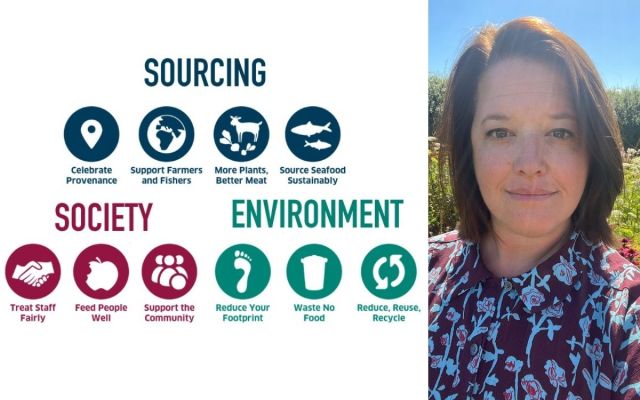
Food waste remains one of the biggest sustainability challenges facing hospitality in Australia. The SRA states, “with new Food Organics and Garden Organics (FOGO) legislation coming into effect in NSW from July 2026, restaurants will soon be required to separate food waste from general waste — helping reduce landfill and improve resource recovery.”
Savill has just formed the Circular Hospitality Australia (CHA) collective with two like-minded people — Jeanine Bribosia, director and founder of The Cru, and Rebecca Bernstone, a food business consultant at The Cultivator. As a partner of the SRA, the aim of CHA is communication, facilitation of sustainable practice and business accreditation.
“It’s a really nice, circular approach. We approached them and said can we support them in some way or work with them. We are partnering with them to get the word out in Australia,” Savill said.
Bribosia said Savill is legendary in the Australian food and hospitality industry.
“She has been a changemaker from very early in her career, across broadcast, publishing, events, and placemaking,” Bribosia said. “So, it is no surprise that she has now turned her attention and extensive networks to helping hospitality become more sustainable, and achieve better outcomes for themselves, the industry and society generally. Joanna wants to make an impact on hospitality, and she has done that in spades.”
Bernstone added that, over the years, Savill has established herself as a powerful connector of people and causes, at home and abroad.
“It’s this intuitive networking and our work with The Sustainable Restaurant Association that’s helping to build a new community of hospitality operators united in their commitment to sustainability,” Bernstone said. “For Jeanine and I, it’s a pleasure to work alongside Joanna — a vibrant and powerfully positive force in our industry.”
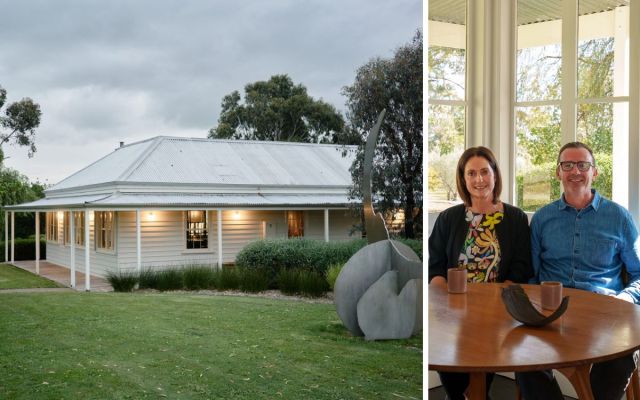
Brae in Birregurra, Victoria, became the first FMG certified business in Australia in 2024, with a three-star rating. Dan Hunter is the head chef at Brae and Julianne Bagnato is the operations manager. Savill rang Hunter and Bagnato and had a long chat with them about what they felt was important about the FMG accreditation.
“Joanna’s been a champion of the Australian hospitality industry for many years,” Bagnato said. “She understands the cultural importance of restaurants, Australia’s place in the world of gastronomy and the power that restaurants have to shape culture and behaviour.
“She’s passionate about pushing the industry to change in ways that are positive for diners, restaurant owners, the people who work in them and the environment. We’re really pleased to see her form the CHA collective and look forward to her spreading the FMG message in Australia.”
Savill said there are about 10 businesses going through the certification process.
“We’re hoping by about May-June we should have a bit of a posse of food industry leaders.”
The Salopian Inn in South Australia was FMG certified with a three-star rating in May and Famelia in Sydney has achieve two stars in April.


With all the dining out that she does for work, and an Italian husband who was a chef, what does Savill enjoy cooking at home?
“I’m a big fan of Christine Manfield’s and Charmaine Solomon’s books,” she said. “I love just buying good-quality curry pastes and making a chicken curry, using a really good chicken and cutting it into pieces on the bone, a couple of nice side dishes and good rice.
“That’s my idea of heaven. My husband loves it except he hates the fact that I leave the chicken on the bone. I have to de-bone it for him.”
That’s love.
Featured image: Food writer, presenter and sustainability campaigner Joanna Savill outside Bar Mamoni. Photo: Nicola van Laar